
The Right Watering System for Every Green Space
Plan irrigation for lawns, planting beds and tree zones with TREX sprinklers, drippers, valves and fittings. Match each area to a practical watering method and a manageable control layout.

Plan Around Plants, Paths and Everyday Use
Different Areas Need Different Schedules
Group plants with similar watering needs. Consider sun exposure and soil conditions when separating lawns, beds and trees into irrigation zones.
Keep Water on the Planted Area
Choose coverage patterns that fit borders and corners. Check spray direction near paving, building entrances and roads.
Keep Equipment Accessible
Plan valve-box locations, pipe routes and service access around paths and planting plans. Keep drawings for future repairs and landscape changes.
Sprinklers for Lawns. Localized Watering for Beds.
Select products by the area they serve, then confirm flow, pressure and operating requirements for each zone.
Pop-up Sprinklers
Use suitable pop-up bodies and nozzles for the lawn shape. Check nozzle compatibility, coverage overlap and required pressure using manufacturer data.
- Match application rates within a sprinkler zone.
- Allow clearance for plant growth and nearby structures.
Drip Tubing & Emitters
Place outlets near the planted root zone. Plan suitable filtration and pressure regulation for the selected drip equipment.
- Size the layout for the planting pattern.
- Include accessible flushing points.
Targeted Root-Zone Coverage
Compare multiple drip outlets with micro sprinklers where broader localized coverage is needed. Check placement against the growing root zone.
- Keep wetting patterns clear of paths.
- Review outlet positions as plants mature.

Give Each Zone Its Own Watering Schedule
Drip outlets and conventional sprays deliver water at different rates. Separate their controls so each can run for a suitable duration.
Check the actual wetting pattern after installation. Use the result to refine the layout and schedule.
Read the drip vs sprinkler comparison →Connect Coverage, Control and Service Access
Use this list to prepare a product request. Confirm compatibility with the existing water supply, piping and controller before ordering.
| Function | Products | Selection checks |
|---|---|---|
| Lawn coverage | Pop-up sprinklers | Nozzle and body compatibility, arc, radius, pop-up height and operating pressure. |
| Bed irrigation | Drip tubing and emitters | Outlet flow, spacing, pressure range and the root-zone layout. |
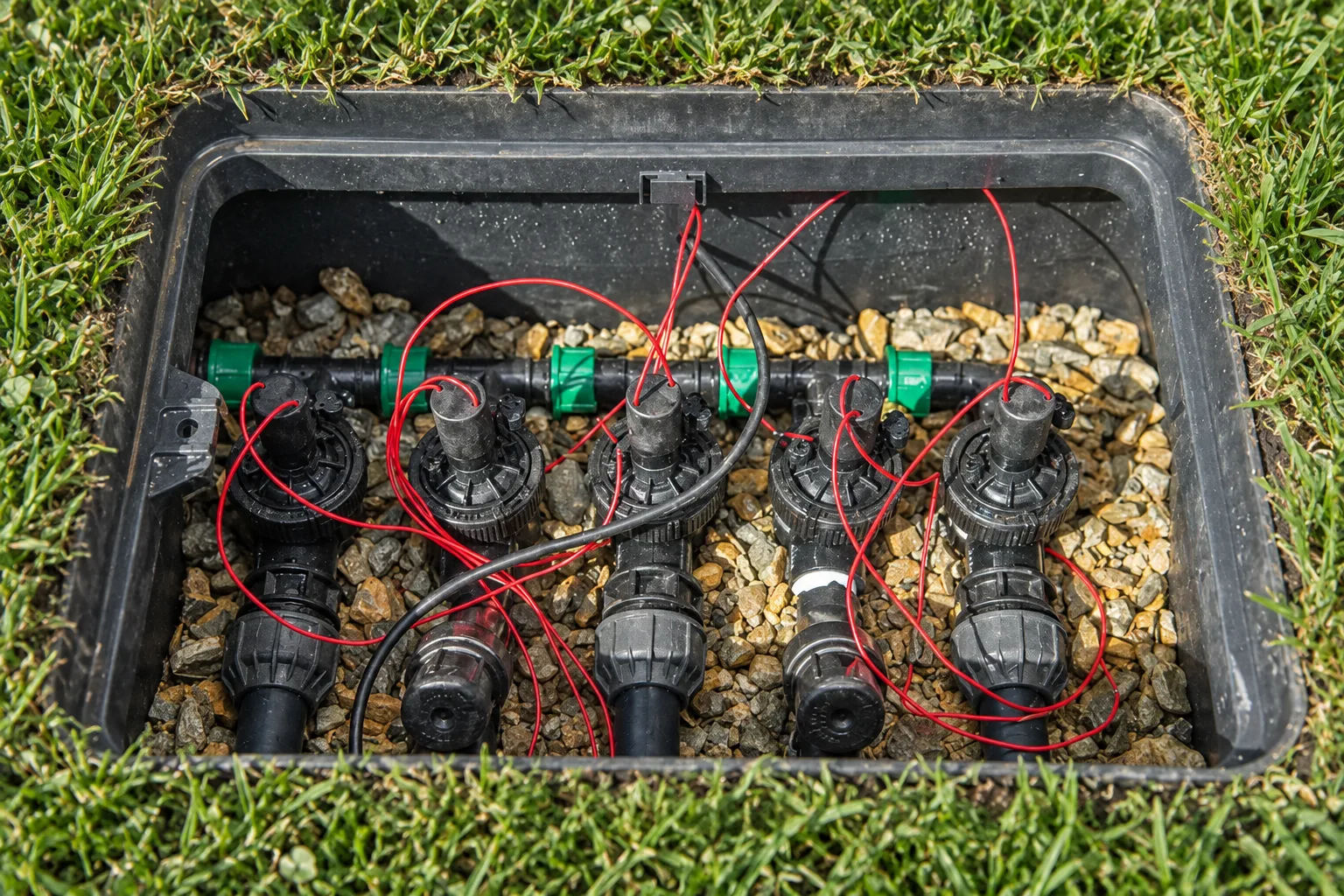
| Automatic zone control | Solenoid valves | Controller output, solenoid voltage and type, zone flow and valve pressure requirements. |
| Access and isolation | Valve boxes and ball valves | Service clearance, pipe connections and suitability for the installation location. |
| Filtration and connections | Irrigation filters and PP compression fittings | Water quality, filtration grade, pipe outside diameter and pressure rating. |
Make Control Compatibility Part of the Specification
Provide the controller model and output specification when selecting a solenoid valve. AC and DC latching solenoids are not automatically interchangeable.
For a small installation, discuss whether a water timer fits the required connection, pressure and schedule. Larger systems may need a multi-station controller and dedicated zone wiring.
Confirm pressure regulation and any required backflow protection as part of the site design.
Share the Site Details That Shape Your Product List
Map the Areas
Send a scaled plan or dimensions showing lawns, beds, trees, hardscape and slopes. Mark the water connection and any areas with restricted access.
Check Water and Controls
Share measured flow and pressure under operating conditions, pipe sizes and existing controller details. Static pressure alone does not establish available zone capacity.
Confirm What You Need
List new or replacement items, quantities, preferred connections and delivery location. For retrofits, include equipment labels and photos.
After installation: Run each zone to check coverage, leaks and valve operation. Keep a zone map and review watering schedules as seasons and planting conditions change.
Check the Details Before Selecting Components
Flow & Pressure Loss Calculator
Estimate straight-pipe friction loss and velocity for a proposed flow.
Use the calculator → CONTROL OPTIONSSolenoid vs Manual Valves
Compare automatic zone operation with manual control.
Read the comparison → DRIP MAINTENANCEPrevent Emitter Clogging
Review filtration, flushing and the role of water quality.
Read the guide →Landscape Irrigation FAQ
Can sprinklers and drip irrigation share one zone?
Use separate zones for conventional spray and drip irrigation because their application rates and operating requirements differ. Separate control allows each area to receive an appropriate runtime.
How do I choose pop-up sprinkler spacing?
Use the selected nozzle's performance data and coverage guidance. Account for lawn shape, pressure, wind and obstructions. Confirm the installed coverage before finalizing the schedule.
Will a solenoid valve work with my existing controller?
Check the controller output against the solenoid voltage, current and operating type, including AC or DC latching. Also confirm the valve's hydraulic operating range and connection size.
Can I keep the existing pipes when upgrading a landscape system?
They may be reusable if their condition, dimensions, pressure rating and capacity suit the revised layout. Check operating measurements and connection compatibility before adding outlets.
What should I send for a quotation?
Send the site plan, planted areas, measured supply flow and pressure, existing equipment details, required quantities and delivery country. Photos are helpful for identifying replacement parts.
Plan Your Next Landscape Irrigation Project
Share the site layout and equipment requirements with TREX. Ask about products for your lawn, planting beds and control zones.
Need another way to reach us? Visit our contact page.