
An irrigation valve box can make a system easy to maintain, or it can turn every repair into digging, cutting, and guesswork. The problem usually starts with the wrong size or poor frost planning. I avoid that risk by matching the box to the valve layout, fittings, depth, and service space before installation.
The right irrigation valve box should fit the valve body, pipe fittings, operating clearance, and burial conditions with room left for future maintenance. A 6-inch box may work for one compact 3/4-inch valve, while 10-inch and larger boxes are better for 1-inch main valves, manifolds, gauges, elbows, tees, or multi-valve layouts.

A valve box looks simple from the outside, but small details decide whether it works well underground. I always look beyond the nominal pipe size. The real question is whether the full valve assembly can be installed, operated, inspected, drained, and repaired without damaging the surrounding landscape.
What Size Irrigation Valve Box Do I Need?
Choosing the wrong irrigation valve box size creates tight spaces, blocked handles, and difficult repairs. The issue gets worse after backfilling because soil pressure and limited access make every adjustment harder. I start size selection by measuring the complete valve group, not just the pipe diameter.
The best irrigation valve box size depends on the largest outside dimension of the installed valve assembly, including valves, elbows, tees, unions, threaded adapters, pressure gauges, and hand-clearance space. A 6-inch box suits a single compact valve, while 10-inch, 12-inch, or 14-inch boxes suit larger or multi-branch layouts.
I measure the assembly, not only the valve
I have seen buyers estimate the box size from the pipe size alone. That method often fails. A 1-inch valve does not only need space for a 1-inch body. It also needs room for connection parts, thread engagement, turning tools, and access to the lid opening.
A simple planning method works better:
- Draw the valve layout from above.
- Mark the direction of every pipe.
- Add elbows, tees, unions, and adapters.
- Measure the widest outside dimension.
- Add hand clearance on both sides.
- Check the total height against the internal box height.
For small gardens, a 6-inch or 8-inch valve box may be enough. For farm irrigation, landscape zones, municipal green spaces, or commercial projects, larger boxes often reduce service time later.
| Common Box Size | Best-Fit Application | Typical Limitation |
|---|---|---|
| 6-inch | One compact 3/4-inch take-off valve or small terminal point | Little space for fittings or tall valve stems |
| 8-inch | Small garden zones with one valve and simple pipe routing | May still be tight with elbows or unions |
| 10-inch | One 1-inch main valve or compact manifold | Needs checking if gauges or tees are included |
| 12-inch | Multiple branch valves or wider fitting layout | Requires more excavation space |
| 14-inch and above | Farm, commercial, or large landscape irrigation nodes | Higher material and installation cost |
Pipe direction changes the required size
Elbows and tees create horizontal space demand. This point is easy to miss. A valve may fit in a box when it is placed alone on a workbench, but it may not fit once two elbows and a tee are attached underground.
I recommend leaving extra space when:
- The pipe enters and exits from different directions.
- The valve group includes 90-degree elbows.
- A tee connects a branch line.
- The installation depth is shallow.
- The cover must close flush with the ground.
- The valve needs to be operated by hand or with a key.
If the box is too small, the installer may force the pipe angle. That can create stress at threaded joints or solvent-welded joints. Over time, stress can lead to leaks, especially in systems exposed to pressure cycles or soil movement.1
Depth matters as much as width
A 6-inch box may physically accept a compact brass water valve set, but the operating rod or handle may not have enough stroke if the internal height is limited. This is especially important when the valve set includes extended threaded connectors, stainless steel nipples, or thickened fittings.
I always ask for three dimensions before confirming a box:
- Internal top opening
- Internal bottom space
- Internal usable height
The usable height should allow the lid to close without touching the valve stem, handle, gauge, or accessory. If the lid presses on the assembly, it can create operating problems and premature wear.
How Should an Irrigation Valve Box Handle Frost, Water, and Soil Pressure?
An irrigation valve box does not replace proper winterization2, but it should protect buried valves from soil contact, surface impact, and poor drainage. If frost, groundwater, or weak covers are ignored, the valve station can become difficult to service and more likely to corrode or deform.
A good irrigation valve box should have suitable burial strength, a secure cover, enough internal space for drainage and insulation planning, and a design intended for underground use. In freezing climates, buyers should also evaluate installation depth, system draining, local frost line, and professional winterization advice.

A valve box is protection, not a complete frost solution
I like to be clear about this point. A buried box helps isolate the valve area from direct soil pressure and surface contact. It can also reduce exposure to debris. However, it does not automatically prevent freezing if water remains inside the valve or pipe.3
In cold regions, frost control usually depends on the whole system design:
- Proper pipe depth based on local climate4
- Drain valves or blow-out procedures
- Correct slope where gravity drainage is used
- Compatible valves and fittings
- Insulation where appropriate
- A cover that closes properly
- Professional evaluation for local frost conditions
For B2B procurement, I suggest asking the supplier whether the product is suitable for buried irrigation service. I would not rely only on product appearance. Two boxes may look similar, but one may be designed for underground loading while the other may be for light-duty access only.
Water intrusion can damage metal components
Many irrigation systems use a mix of plastic valves, brass take-off valves, stainless threaded connectors, and other accessories. If groundwater enters and stays inside the box, metal parts can corrode faster.5 Plastic parts may resist corrosion well, but threaded joints, springs, screws, or attached metal accessories still need protection.
A suitable buried valve box should support:
- Reasonable cover fit
- Stable sidewall structure
- Service access after backfilling
- Drainage planning
- Resistance to soil pressure
- Compatibility with nearby pipe materials
If a product is described as a “buried box,” I verify what that means. I ask whether the design has enough load capacity for its intended location. A box placed in a flower bed faces different forces than a box near a walkway, driveway edge, or farm equipment route.
I do not treat “buried type” as a decoration term. I treat it as a functional requirement.
Cover strength affects long-term maintenance
A weak cover can sink, crack, or deform after soil settlement.6 Once that happens, dirt enters the box, the lid becomes hard to remove, and the valve becomes harder to find. In commercial landscapes and agricultural irrigation, this creates real labor cost.
When I evaluate cover design, I check:
| Evaluation Point | Why It Matters |
|---|---|
| Cover thickness | Affects deformation resistance |
| Cover fit | Helps keep debris and surface water out |
| Surface texture | Reduces slipping and improves handling |
| Marking | Helps identify irrigation access points |
| Load suitability | Must match the installation environment |
| Replacement availability | Reduces maintenance downtime |
For critical projects, I recommend qualified site evaluation. Soil conditions, traffic exposure, frost depth, and water table height vary by region. A professional installer can confirm whether the selected valve box and installation method fit the actual site.
What Details Are Easy to Miss When Buying an Irrigation Valve Box?
An irrigation valve box is often purchased as a small accessory, so buyers may focus only on the top diameter or catalog size. That creates problems later. I pay close attention to internal clearance, accessory compatibility, installation environment, and whether the box is designed for buried use.
The easiest details to miss are internal height, valve stem clearance, compatibility with brass or plastic valve assemblies, space for elbows and tees, cover strength, sealing quality, and actual buried-use design. Buyers should also avoid using unrelated certifications, such as water-saving labels, as the main selection standard.
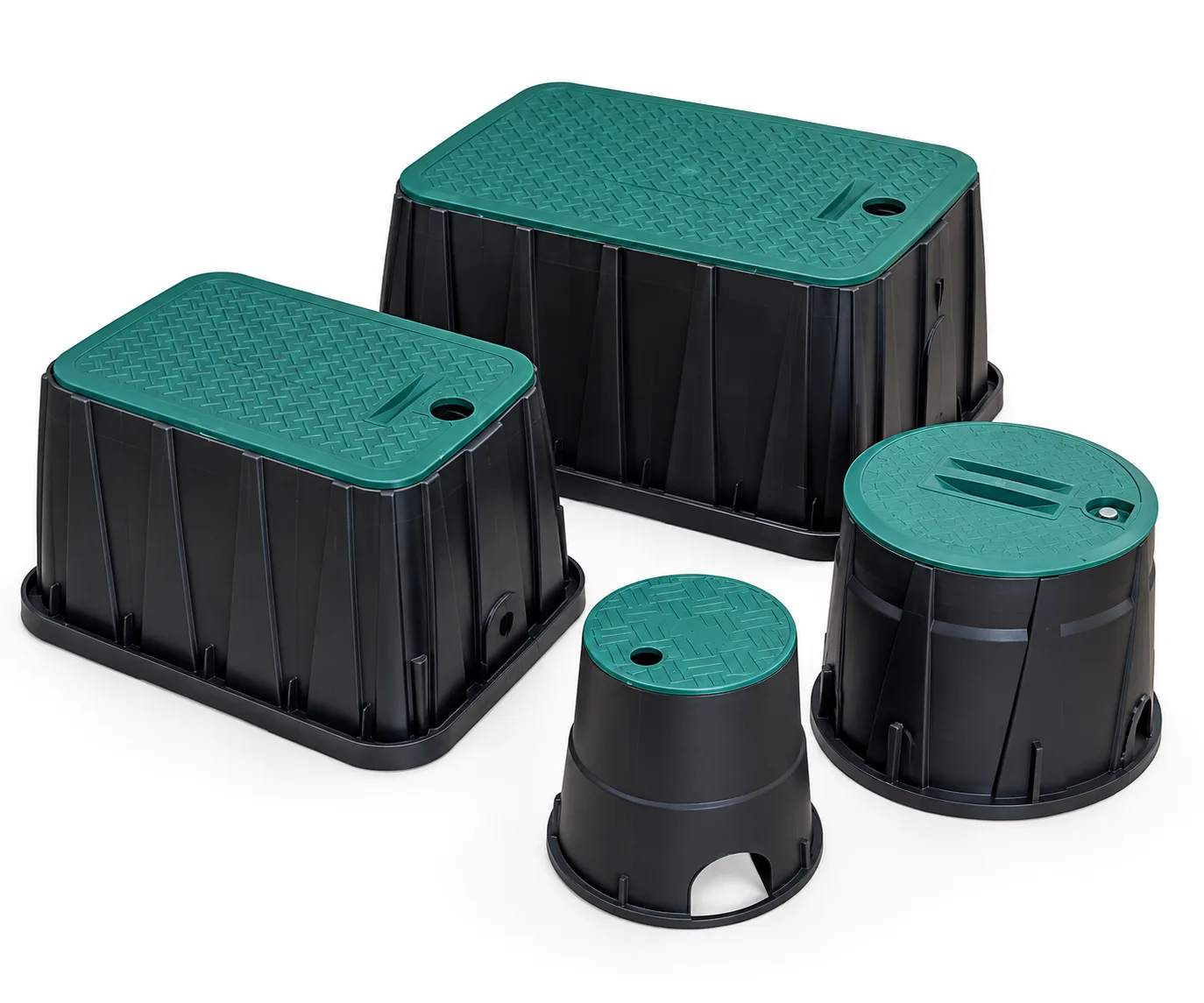
Internal height can block operation
Some compact valve combinations can fit inside a box horizontally but fail vertically. For example, a thickened 3/4-inch brass take-off valve set may physically fit in a 6-inch box. But if the total height is too close to the lid, the operating rod may not move correctly.
This issue becomes more common when the assembly includes:
- 304 stainless steel threaded nipples
- Brass quick-coupling parts
- Tall handles
- Pressure gauges
- Threaded adapters
- Union connectors
- Raised valve stems
Before ordering, I confirm the total valve height and compare it with the internal clear height of the box. I also leave extra room for hand movement. A valve that only fits on paper may be frustrating in the field.
Water-saving certification is not always relevant
Some buyers ask whether an irrigation valve box has water-saving certification. In most cases, that is not the key question. The valve box is a protective enclosure. It does not directly control flow rate, irrigation scheduling, pressure regulation, or water distribution efficiency.
So I do not use water-saving certification as a required purchasing threshold for this product category. Instead, I focus on the parameters that affect reliability:
- Size match
- Material strength
- Burial suitability
- Cover performance
- Frost and drainage planning
- Compatibility with the valve assembly
- Maintenance access
Water saving depends more on the full irrigation system, including emitters, sprinklers, controllers, pressure regulation, filters, pipes, and valves. The valve box supports that system by protecting key components and keeping maintenance practical.
The “looks similar” problem is real
Many valve boxes look similar in photos. A low-duty cover and a buried irrigation cover may both appear acceptable online. That is why I ask for technical information, product photos from different angles, and application guidance.
For procurement teams, I recommend checking:
- Internal dimensions, not only nominal size
- Material type and wall structure
- Cover thickness and fit
- Designed burial depth or application
- Compatibility with target valve models
- Packaging for bulk shipment
- Lead time for repeat orders
- Availability of custom colors or markings
If the valve box will be paired with plastic valves and pipe fittings, I also check the full system compatibility. In our manufacturing context, we supply plastic valves and fittings in materials such as PVC, CPVC, UPVC, PP, PPR, PPH, and PVDF. For any complete irrigation or fluid handling project, I suggest buyers verify material compatibility, pressure requirements, and chemical exposure with qualified professionals.
How Do I Match an Irrigation Valve Box with Valves, Fittings, and Supplier Quality?
A reliable irrigation valve box selection should fit the full procurement plan, not only the installation hole. Buyers need consistent valve quality, compatible pipe standards, clear documentation, and practical supplier support. I look at the box together with valves, fittings, testing, lead time, and replacement needs.
To match an irrigation valve box with the wider system, buyers should confirm valve quantity, valve size, fitting direction, pressure accessories, material compatibility, maintenance clearance, and supplier documentation. For large projects, they should also evaluate manufacturing capacity, inspection process, delivery stability, and OEM or ODM support.
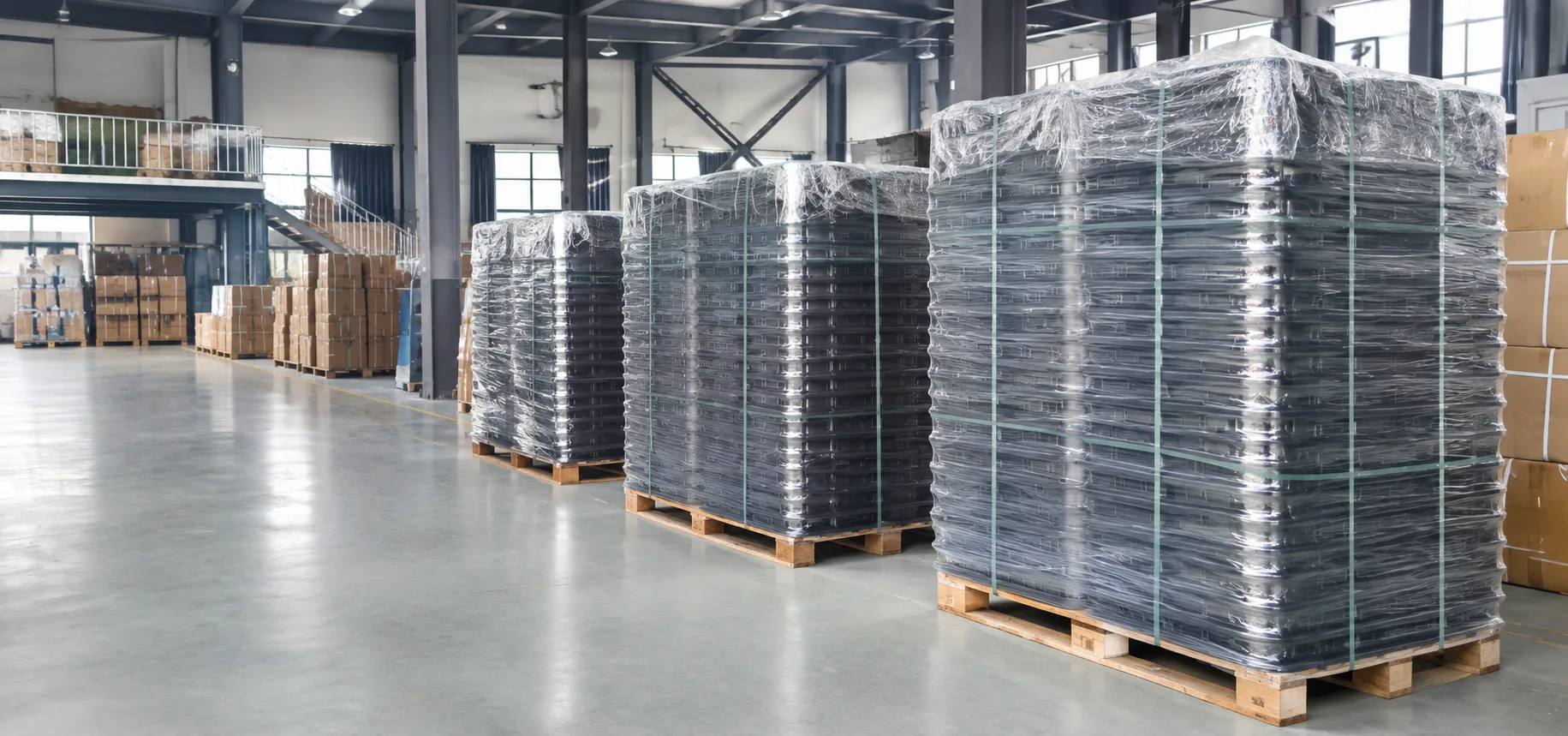
Match the box to the valve station design
The valve box is only one part of the valve station. I usually review the whole station layout before confirming the final size.
A practical checklist includes:
- How many valves will sit in one box?
- Is there one main valve or several branch valves?
- Does the system need a pressure gauge?
- Will the installer add a filter, union, or quick connector?
- Are the pipes entering from one side or multiple sides?
- Is the box in a garden, lawn, farm, walkway, or service area?
- Will the valve need seasonal draining or winter shutdown?
- How often will maintenance staff open the cover?
For a simple terminal water point, a 6-inch box may be efficient and neat. For a 1-inch main valve, several branch valves, or added gauges, I would normally move to a 10-inch or larger box. This prevents future replacement after the landscape is finished.
Consider valve and fitting materials
The box protects the assembly, but the assembly itself must suit the application. Plastic valves are widely used in irrigation because they can offer corrosion resistance, low weight, and efficient installation. However, each material has its own application range.
| Material | Common Use Consideration | Buyer Checkpoint |
|---|---|---|
| PVC / UPVC | Irrigation and water distribution | Pressure rating and UV exposure |
| CPVC | Higher temperature than standard PVC in some systems | Temperature and chemical compatibility |
| PP / PPR | Water systems and certain industrial uses | Jointing method and pressure class |
| PPH | Chemical and industrial fluid handling | Media compatibility |
| PVDF | Strong corrosion resistance for demanding fluids | Cost and chemical service conditions |
| Brass / Stainless accessories | Take-off points, nipples, adapters | Corrosion environment and thread compatibility |
For application-specific decisions, I recommend qualified engineering review. Irrigation water, fertilizers, reclaimed water, chemicals, temperature, and pressure cycles can affect material choice.
Evaluate the supplier, not just the product photo
In B2B purchasing, I prefer suppliers who can support repeatable quality. A low-cost valve box or valve may not be low-cost if it causes delays, mismatched parts, or site rework.
For plastic valves and pipe fittings, I look for evidence such as:
- Manufacturing experience
- Modern injection molding capacity
- Use of 100% new material when claimed
- Pressure testing process
- Inspection records
- Clear product standards such as DIN, ANSI, BS, or JIS where applicable
- OEM/ODM ability for markings, colors, or molds
- Stable delivery time
- Responsive after-sales support
In our business context, we have more than 15 years of manufacturing experience, over 100 injection molding machines, and we state that we use 100% new material for our plastic valve and fitting products. We also state that products have passed SGS and BV testing and hold CE, REACH, and ISO 9001 documentation. I always tell buyers to verify these documents against the exact product, order, and market requirement before making a procurement decision.
Bulk buyers should plan for replacement and standardization
For distributors, contractors, and engineering companies, standardization saves time. If every site uses a different valve box size, maintenance teams need more spare parts and more training.
I suggest creating a simple internal standard:
| System Type | Recommended Box Strategy |
|---|---|
| Small residential garden | 6-inch or 8-inch for single compact valves |
| Landscape zone control | 10-inch for main valve or accessories |
| Commercial irrigation | 12-inch or larger for manifolds |
| Farm irrigation | 12-inch, 14-inch, or project-specific sizing |
| Municipal green space | Larger boxes with strong cover and easy access |
This does not mean one size fits all. It means the procurement team has a starting point. Site conditions still decide the final selection.
Frequently Asked Questions
Can I use a 6-inch irrigation valve box for a 1-inch valve?
A 6-inch irrigation valve box is usually too small for a 1-inch valve with fittings, elbows, or accessories. It may fit only in very compact layouts. I recommend checking the complete assembly dimensions and considering a 10-inch or larger box for better maintenance access.
Does an irrigation valve box need water-saving certification?
An irrigation valve box normally does not need water-saving certification because it is a protective enclosure, not a water control device. Buyers should focus on size, material strength, buried-use design, cover performance, frost planning, and compatibility with valves and fittings.
How much extra space should I leave inside the valve box?
I prefer leaving enough space for hand access, tool movement, pipe stress relief, and future replacement. As a practical rule, the valve should not touch the sidewall or lid, and fittings should not force the pipe into an unnatural angle.
Can one irrigation valve box hold multiple valves?
Yes, one irrigation valve box can hold multiple valves if the box is large enough. Multi-valve manifolds often require 12-inch, 14-inch, or larger boxes. Buyers should draw the layout, include elbows and tees, and measure the widest assembled dimension before ordering.
How do I protect valves from freezing inside a valve box?
A valve box helps protect access points, but it does not guarantee freeze protection. I recommend checking local frost depth, draining the system, using proper winterization procedures, and consulting a qualified irrigation professional for cold-climate installations.
Conclusion
Choosing the right irrigation valve box starts with the full valve assembly, not the catalog size alone. I recommend measuring width, height, fittings, pipe direction, and service clearance before buying. I also check buried-use strength, cover quality, drainage, frost planning, and supplier reliability. If you are sourcing valves, pipe fittings, or complete irrigation components for distribution or projects, contact us to discuss compatible plastic valve and fitting options for your system.
"Plastic Pipe Failure, Risk, and Threat Analysis", https://rosap.ntl.bts.gov/view/dot/34642/dot_34642_DS1.pdf. Engineering studies of buried plastic piping and joint performance describe how imposed stresses, cyclic internal pressure, and ground movement can contribute to joint leakage or failure; the evidence supports the failure mechanism rather than proving that every undersized valve box will cause leaks. Evidence role: mechanism; source type: paper. Supports: that mechanical stress, cyclic pressure loading, or ground movement can increase the risk of leakage or failure at pipe joints.. Scope note: The source would support the mechanism generally, not necessarily the exact irrigation valve-box scenario. ↩
"Preparing Your Sprinkler System for Winter", https://extension.colostate.edu/resource/home-sprinkler-systems-preparing-your-sprinkler-system-for-winter/. University extension guidance on irrigation winterization states that systems exposed to freezing conditions should be drained or blown out to prevent freeze damage; this supports the statement that a valve box is not a substitute for winterization. Evidence role: expert_consensus; source type: education. Supports: that irrigation systems in freezing climates require winterization measures such as draining or blowout and cannot rely on access boxes alone for freeze protection.. ↩
"Preparing Your Sprinkler System for Winter", https://extension.colostate.edu/resource/home-sprinkler-systems-preparing-your-sprinkler-system-for-winter/. Extension winterization materials explain that water remaining in irrigation piping and valves can freeze and expand, causing damage; this supports the article’s mechanism, although local risk depends on climate and installation depth. Evidence role: mechanism; source type: education. Supports: that residual water in irrigation pipes and valves can freeze and damage the system unless removed or otherwise protected.. Scope note: The evidence supports freeze risk from retained water generally, not the performance of any specific valve-box model. ↩
"Conservation Practice Standard Irrigation Pipeline (Code 430)", https://www.nrcs.usda.gov/sites/default/files/2024-12/Irrigation%20Pipeline%20%28430%29%20%28Ft.%29%20%2811-24%29%20Standard%20Document.pdf. Government and geotechnical references define frost depth as a location-dependent design parameter for buried utilities; this supports using local climate or frost-depth data when planning irrigation pipe depth. Evidence role: general_support; source type: government. Supports: that buried pipe depth and frost protection practices should account for local frost depth or climate conditions.. Scope note: Such sources may provide frost-depth principles rather than irrigation-specific box-sizing rules. ↩
"Corrosion Considerations for Buried Metallic Water Pipe", https://www.reginfo.gov/public/do/DownloadDocument?objectID=55164601. Corrosion research shows that prolonged contact with groundwater or moist soil environments can accelerate deterioration of susceptible metals; this supports the article’s warning about standing water in valve boxes, although corrosion rate depends on alloy, water chemistry, oxygen, and contaminants. Evidence role: mechanism; source type: paper. Supports: that prolonged exposure to groundwater or moisture can accelerate corrosion of susceptible metal fittings and components.. Scope note: The source would support the corrosion mechanism generally rather than quantify corrosion in a specific irrigation valve box. ↩
"Geotechnical Engineering Circular No. 6 - Shallow Foundations", https://www.fhwa.dot.gov/engineering/geotech/pubs/010943.pdf. Utility-enclosure and cover-rating standards classify access-box covers according to expected loading conditions, supporting the need to match cover strength to the installation environment; this is contextual because standards may address utility enclosures broadly rather than irrigation-only boxes. Evidence role: general_support; source type: institution. Supports: that underground utility or valve-box covers must be selected for expected loads to prevent cracking, deformation, or settlement-related access problems.. Scope note: The evidence may not specifically document soil settlement effects for every plastic irrigation valve cover. ↩